

As a supplier of PVC foam boards, I often encounter inquiries from customers regarding the resistance to solvents of these boards. Understanding the solvent resistance of PVC foam boards is crucial for various applications, especially those where the boards may come into contact with different chemicals. In this blog, I will delve into the topic of the resistance to solvents of PVC foam boards, exploring the factors that influence it and its implications for practical use.
Understanding PVC Foam Boards
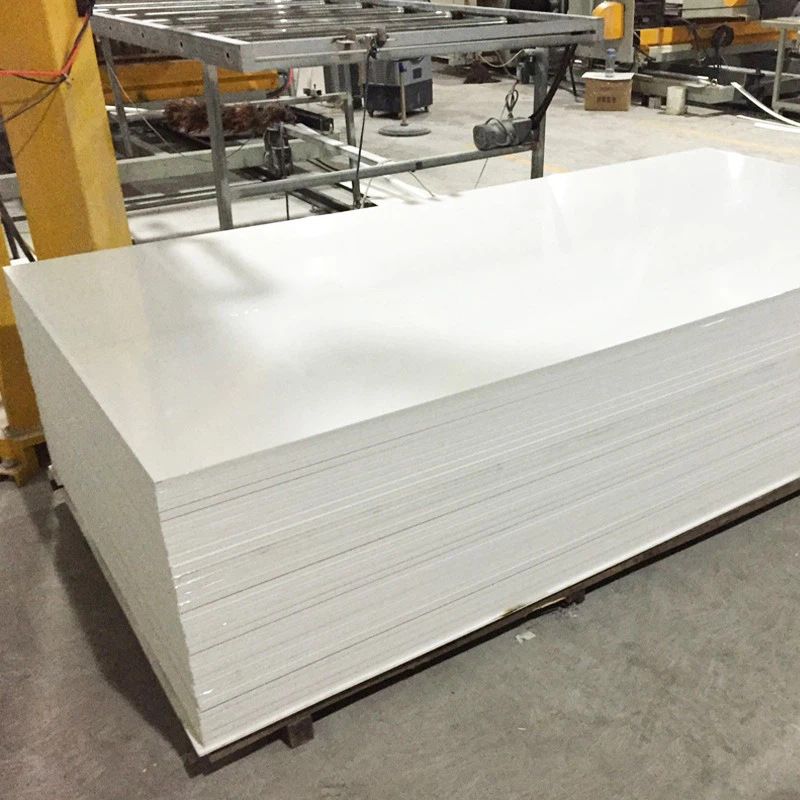
Before discussing the solvent resistance, let's briefly introduce PVC foam boards. PVC foam boards are lightweight, rigid, and versatile materials that are widely used in advertising, construction, and furniture industries. There are different types of PVC foam boards available, such as PVC Celuka Board, PVC Free Foam Board, and PVC Rigid Sheet. Each type has its own characteristics and is suitable for specific applications.
Factors Affecting Solvent Resistance
The solvent resistance of PVC foam boards is influenced by several factors, including the chemical composition of the PVC resin, the additives used, and the manufacturing process.
Chemical Composition of PVC Resin
The base PVC resin plays a significant role in determining the solvent resistance of the foam board. Different grades of PVC resin have varying degrees of crystallinity and molecular structure, which affect their interaction with solvents. Generally, PVC resins with higher molecular weights and greater crystallinity tend to have better solvent resistance.
Additives
Additives are often incorporated into PVC foam boards to enhance their performance. Plasticizers, stabilizers, and fillers can all impact the solvent resistance of the boards. Plasticizers, for example, are used to increase the flexibility of PVC, but they can also make the material more susceptible to solvent attack. On the other hand, certain stabilizers can improve the chemical stability of the PVC and enhance its resistance to solvents.
Manufacturing Process
The manufacturing process of PVC foam boards can also affect their solvent resistance. The extrusion or molding process can influence the density, porosity, and surface finish of the boards, which in turn affect their interaction with solvents. Boards with a more uniform structure and a smooth surface are generally more resistant to solvents.
Solvent Resistance Testing
To determine the solvent resistance of PVC foam boards, various testing methods can be used. One common method is the immersion test, where samples of the board are immersed in a specific solvent for a certain period of time. The changes in the appearance, weight, and dimensions of the samples are then measured to evaluate the solvent resistance.
Another method is the wipe test, where a solvent is applied to the surface of the board using a cloth or a swab. The surface is then observed for any signs of damage, such as swelling, discoloration, or loss of gloss.
Solvent Resistance of Different Types of PVC Foam Boards
The solvent resistance of PVC foam boards can vary depending on the type of board.
PVC Celuka Board
PVC Celuka Board typically has good solvent resistance due to its dense outer skin and cellular core structure. The outer skin provides a barrier against solvents, while the cellular core helps to absorb and distribute the stress caused by solvent exposure. However, the solvent resistance of PVC Celuka Board can still be affected by the type and concentration of the solvent, as well as the duration of exposure.
PVC Free Foam Board
PVC Free Foam Board is designed to be more environmentally friendly and may have different solvent resistance properties compared to traditional PVC foam boards. The absence of certain additives in PVC Free Foam Board can make it more or less resistant to solvents, depending on the specific formulation.
PVC Rigid Sheet
PVC Rigid Sheet is a solid and dense material that generally has good solvent resistance. Its high density and low porosity make it less susceptible to solvent penetration. However, like other PVC foam boards, the solvent resistance of PVC Rigid Sheet can be influenced by the factors mentioned above.
Implications for Practical Use
The solvent resistance of PVC foam boards has important implications for their practical use. In applications where the boards may come into contact with solvents, such as in chemical laboratories, industrial settings, or outdoor environments with exposure to pollutants, it is essential to choose a board with appropriate solvent resistance.
For example, in advertising applications, PVC foam boards may be exposed to cleaning agents, paints, and adhesives. If the board does not have sufficient solvent resistance, it may be damaged by these chemicals, resulting in a loss of appearance and functionality.
In construction applications, PVC foam boards may be used in areas where they are exposed to water, moisture, and chemicals. A board with good solvent resistance can ensure the long-term durability and performance of the structure.
Conclusion
In conclusion, the solvent resistance of PVC foam boards is an important property that is influenced by several factors, including the chemical composition of the PVC resin, the additives used, and the manufacturing process. Different types of PVC foam boards, such as PVC Celuka Board, PVC Free Foam Board, and PVC Rigid Sheet, have varying degrees of solvent resistance.
When selecting PVC foam boards for a specific application, it is crucial to consider the solvent resistance requirements. By understanding the factors that affect solvent resistance and conducting appropriate testing, you can choose the right board that meets your needs.
If you are interested in purchasing PVC foam boards and have any questions about their solvent resistance or other properties, please feel free to contact us for more information. We are committed to providing high-quality PVC foam boards and excellent customer service.

References
- ASTM D543 - Standard Test Methods for Evaluating the Resistance of Plastics to Chemical Reagents
- ISO 175 - Plastics - Determination of the effect of liquid chemicals
- "Handbook of PVC Formulating" by Edward J. Wickson