

What is the flammability of PVC foam board?
As a PVC foam board supplier, I often encounter inquiries from customers regarding the flammability of our products. Understanding the flammability characteristics of PVC foam board is crucial for various applications, including construction, advertising, and interior decoration. In this blog post, I will delve into the topic of PVC foam board flammability, exploring its properties, influencing factors, and safety considerations.
Properties of PVC Foam Board
PVC, or polyvinyl chloride, is a synthetic plastic polymer that is widely used in various industries due to its versatility, durability, and cost - effectiveness. PVC foam board is a lightweight and rigid material made by foaming PVC resin. It has a closed - cell structure, which gives it excellent insulation properties, moisture resistance, and mechanical strength.
One of the key factors affecting the flammability of PVC foam board is the presence of chlorine in the PVC polymer. Chlorine is a halogen element that has flame - retardant properties. When PVC foam board is exposed to fire, the chlorine in the PVC polymer can release hydrogen chloride gas, which can dilute the oxygen in the air and inhibit the combustion process. This makes PVC foam board inherently more fire - resistant compared to some other plastic materials.
Flammability Ratings
To assess the flammability of PVC foam board, it is important to understand the flammability ratings and standards. In many countries, building materials are classified according to their fire performance using standardized tests. For example, in the United States, the most commonly used standard for evaluating the flammability of building materials is the ASTM E84 test, also known as the Steiner Tunnel Test.
The ASTM E84 test measures the surface burning characteristics of a material, including its flame spread index (FSI) and smoke - developed index (SDI). A lower FSI value indicates better fire performance, with Class A materials having an FSI of 0 - 25, Class B materials having an FSI of 26 - 75, and Class C materials having an FSI of 76 - 200.
Most high - quality PVC foam boards have a flame spread index that falls within the Class B or Class C range. This means that they have relatively good fire - resistant properties and can slow down the spread of fire to some extent. However, it is important to note that the flammability of PVC foam board can be affected by various factors, such as the thickness of the board, the presence of additives, and the manufacturing process.
Influencing Factors
Thickness
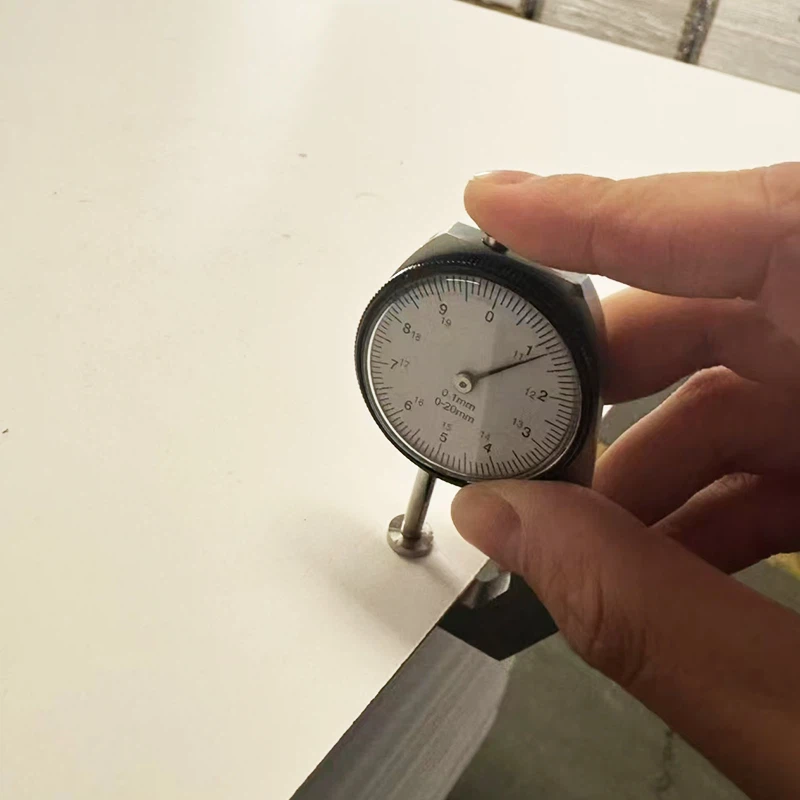
The thickness of the PVC foam board can have a significant impact on its flammability. Generally, thicker boards tend to be more fire - resistant than thinner ones. This is because a thicker board provides more material to act as a barrier against the spread of fire and heat. For example, a 10 - mm thick PVC foam board may have better fire performance than a 5 - mm thick board.

Additives
Additives are often used in the production of PVC foam board to enhance its properties, including its fire - resistant properties. Flame - retardant additives, such as antimony trioxide and phosphate esters, can be added to the PVC resin to further improve the board's fire performance. These additives work by releasing gases that can suppress the combustion process or by forming a protective char layer on the surface of the board.
Manufacturing Process
The manufacturing process can also affect the flammability of PVC foam board. A well - controlled manufacturing process can ensure a uniform cell structure and proper distribution of additives, which can improve the board's fire performance. On the other hand, a poorly manufactured board may have inconsistent properties and may be more prone to catching fire.
Safety Considerations
While PVC foam board has some fire - resistant properties, it is still important to take appropriate safety measures when using it in various applications. Here are some safety considerations:
Installation
When installing PVC foam board, it is important to follow the manufacturer's instructions and use appropriate installation methods. Ensure that the board is properly secured and that there are no gaps or openings that could allow fire to spread.
Ventilation
Proper ventilation is essential when using PVC foam board in enclosed spaces. In case of a fire, the combustion of PVC foam board can release hydrogen chloride gas, which is toxic and can cause respiratory problems. Adequate ventilation can help to remove the toxic gases from the area.
Compatibility with Other Materials
When using PVC foam board in combination with other materials, it is important to consider their compatibility in terms of fire performance. Some materials may have a negative impact on the fire - resistant properties of PVC foam board, so it is important to choose compatible materials.
Our Product Range
At our company, we offer a wide range of PVC foam boards with different properties and fire - resistant ratings. Our PVC Free Foam Board is a high - quality product that is free from harmful substances and has excellent fire - resistant properties. It is suitable for a variety of applications, including advertising, signage, and interior decoration.
Our PVC Rigid Sheet is another popular product that is known for its durability and fire - resistant performance. It is often used in construction and industrial applications where high strength and fire safety are required.
In addition, our PVC Celuka Board has a unique cell structure that provides excellent insulation and fire - resistant properties. It is widely used in the advertising and display industry.
Contact Us for Procurement
If you are interested in purchasing PVC foam board for your project, we would be more than happy to assist you. Our team of experts can provide you with detailed information about our products, including their flammability ratings and technical specifications. We can also offer customized solutions to meet your specific requirements.
Whether you need a small quantity of PVC foam board for a DIY project or a large - scale order for a commercial project, we can provide you with high - quality products at competitive prices. Contact us today to start the procurement process and discuss your needs.
References
- ASTM International. ASTM E84 - 19a Standard Test Method for Surface Burning Characteristics of Building Materials.
- PlasticsEurope. Polyvinyl Chloride (PVC) - Properties, Applications, Recycling.
- Various industry reports on the properties and applications of PVC foam board.