

As a PVC Rigid Sheet supplier, I often encounter questions from customers about the differences between PVC rigid sheet and PVC cable insulation. In this blog post, I'll delve into these differences to help you better understand these two PVC products and make informed decisions for your projects.
1. Composition and Material Structure
PVC, or polyvinyl chloride, is a versatile plastic polymer. However, the composition and structure of PVC rigid sheet and PVC cable insulation vary significantly.
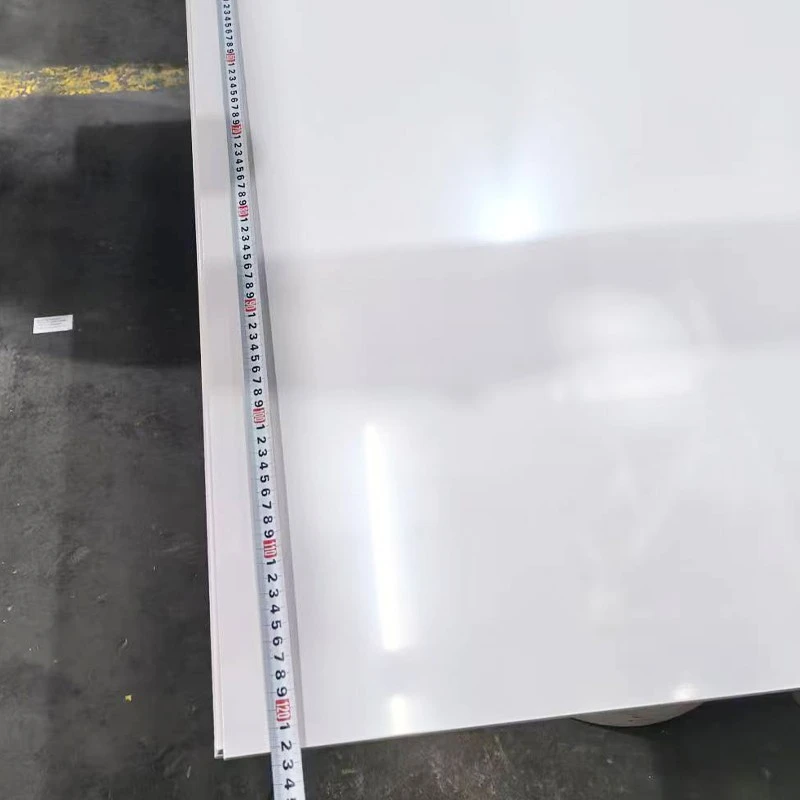
PVC rigid sheet is primarily made of PVC resin, along with various additives such as stabilizers, lubricants, and fillers. These additives are carefully selected to enhance the sheet's mechanical properties, weather resistance, and processability. The sheet has a dense and homogeneous structure, which gives it excellent rigidity and strength. For example, our PVC Rigid Sheet is formulated to have a consistent thickness and smooth surface, making it suitable for a wide range of applications.
On the other hand, PVC cable insulation is a specialized form of PVC that is designed to provide electrical insulation for cables. It contains a higher proportion of plasticizers compared to PVC rigid sheet. Plasticizers are added to make the PVC more flexible and pliable, allowing it to be easily wrapped around the cable conductors. Additionally, cable insulation PVC often includes flame - retardant additives to meet safety standards. The structure of PVC cable insulation is optimized to ensure good electrical performance, such as low dielectric constant and high insulation resistance.

2. Physical Properties
2.1 Hardness and Flexibility
One of the most obvious differences between PVC rigid sheet and PVC cable insulation is their hardness and flexibility. PVC rigid sheet is, as the name suggests, rigid. It has a high Shore hardness value, typically ranging from 75 to 95 Shore D. This hardness makes it suitable for applications where structural integrity is required, such as in signage, construction, and furniture manufacturing.
In contrast, PVC cable insulation is highly flexible. The addition of plasticizers reduces its hardness significantly, giving it a more rubber - like feel. The flexibility allows the insulation to conform to the shape of the cable conductors without cracking or breaking, even when the cable is bent or twisted during installation or use.
2.2 Density
The density of PVC rigid sheet is generally higher than that of PVC cable insulation. PVC rigid sheet has a density in the range of 1.3 to 1.5 g/cm³. The higher density contributes to its strength and durability. PVC cable insulation, with its higher plasticizer content, has a lower density, usually around 1.1 to 1.3 g/cm³. The lower density makes the cable lighter, which is an important factor in cable installation, especially for long - distance cables.
2.3 Temperature Resistance
Both PVC rigid sheet and PVC cable insulation have different temperature resistance characteristics. PVC rigid sheet can withstand relatively high temperatures without significant deformation. It can typically tolerate temperatures up to 60 - 80°C continuously, depending on the specific formulation. This makes it suitable for outdoor applications where it may be exposed to sunlight and heat.
PVC cable insulation, however, has a more specific temperature rating. It is designed to operate within a certain temperature range to maintain its electrical and mechanical properties. For general - purpose PVC cable insulation, the operating temperature range is usually from - 20°C to 70°C. Special - purpose cable insulation can have a wider temperature range, but it is always carefully engineered to meet the requirements of the cable's application.
3. Electrical Properties
3.1 Insulation Resistance
PVC cable insulation is specifically designed to have excellent insulation resistance. It acts as a barrier to prevent the flow of electric current between the conductors and the surrounding environment. High - quality PVC cable insulation can have an insulation resistance of several hundred megohms per kilometer, ensuring safe and efficient electrical transmission.
PVC rigid sheet, although made of PVC, is not primarily used for electrical insulation purposes. While it does have some insulating properties, its insulation resistance is not as high as that of PVC cable insulation. In most cases, PVC rigid sheet is used in non - electrical applications, such as in the production of decorative panels or partitions.
3.2 Dielectric Constant
The dielectric constant is a measure of the ability of a material to store electrical energy in an electric field. PVC cable insulation has a relatively low dielectric constant, typically around 3 - 4 at low frequencies. This low dielectric constant is crucial for minimizing signal loss in high - frequency cables, such as those used in telecommunications.
PVC rigid sheet has a higher dielectric constant compared to PVC cable insulation. Since it is not typically used in high - frequency electrical applications, the higher dielectric constant is not a major concern for its intended uses.
4. Chemical Resistance
Both PVC rigid sheet and PVC cable insulation have good chemical resistance, but their resistance to specific chemicals may vary.
PVC rigid sheet is resistant to many common chemicals, including acids, alkalis, and solvents. This chemical resistance makes it suitable for use in chemical storage tanks, laboratory equipment, and other applications where exposure to chemicals is possible. However, it may be affected by some strong solvents, such as ketones and esters, which can cause swelling or dissolution of the sheet.
PVC cable insulation also has good chemical resistance, especially to water and moisture. This is important for protecting the cable conductors from corrosion. However, the plasticizers in cable insulation can be leached out by some chemicals, which may affect the flexibility and electrical performance of the insulation over time. Therefore, cable insulation is often tested and certified for resistance to specific chemicals based on its intended application.
5. Manufacturing Processes
5.1 PVC Rigid Sheet Manufacturing
The manufacturing process of PVC rigid sheet typically involves extrusion. First, the PVC resin and additives are mixed together in a high - speed mixer to form a homogeneous compound. The compound is then fed into an extruder, where it is heated and melted. The molten PVC is forced through a die to form a continuous sheet of the desired thickness and width. After extrusion, the sheet is cooled and cut to the required lengths. Some PVC rigid sheets may also undergo additional processes, such as surface treatment or printing, depending on the application.
5.2 PVC Cable Insulation Manufacturing
The production of PVC cable insulation is more complex. It usually starts with the compounding of PVC resin, plasticizers, and other additives in a Banbury mixer or a twin - screw extruder. The compound is then extruded onto the cable conductors using a cross - head extruder. The extrusion process must be carefully controlled to ensure uniform thickness and good adhesion of the insulation to the conductors. After extrusion, the insulated cable may undergo a curing process to improve the mechanical and electrical properties of the insulation.
6. Applications
6.1 PVC Rigid Sheet Applications
PVC rigid sheet has a wide range of applications. In the advertising industry, it is commonly used for making signage, such as PVC Free Foam Board and PVC Celuka Board. The smooth surface of the sheet allows for high - quality printing, and its rigidity ensures that the signage maintains its shape.
In the construction industry, PVC rigid sheet is used for wall cladding, partitions, and roofing. It is lightweight, easy to install, and has good weather resistance, making it a popular choice for both interior and exterior applications.
In the furniture industry, PVC rigid sheet can be used for making cabinet doors, drawer fronts, and other decorative elements. Its ability to be cut, drilled, and shaped makes it a versatile material for furniture manufacturing.
6.2 PVC Cable Insulation Applications
The primary application of PVC cable insulation is, of course, in the cable industry. It is used to insulate a wide variety of cables, including power cables, control cables, and telecommunications cables. The flexibility and electrical performance of PVC cable insulation make it an ideal choice for protecting the cable conductors and ensuring reliable electrical transmission.
7. Cost Considerations
The cost of PVC rigid sheet and PVC cable insulation can vary depending on several factors. PVC rigid sheet is generally less expensive per unit volume compared to PVC cable insulation. This is because the manufacturing process of PVC rigid sheet is relatively simpler, and it uses fewer specialized additives.
However, the cost of a project using PVC rigid sheet may be affected by additional processing steps, such as cutting, shaping, and finishing. On the other hand, PVC cable insulation is more expensive due to the higher cost of plasticizers and flame - retardant additives, as well as the more complex manufacturing process. The cost of cable insulation is also influenced by the cable's voltage rating, size, and performance requirements.
In conclusion, PVC rigid sheet and PVC cable insulation are two distinct products with different compositions, properties, manufacturing processes, and applications. Understanding these differences is crucial for choosing the right PVC product for your specific needs. If you are in the market for high - quality PVC rigid sheet for your projects, we are here to help. Our company offers a wide range of PVC rigid sheet products that meet various industry standards and customer requirements. Whether you need it for signage, construction, or furniture, we can provide you with the best solutions. Contact us today to start a procurement discussion and find the perfect PVC rigid sheet for your application.
References
- "Handbook of PVC Technology" by W. V. Titow.
- "Plastics Engineering Handbook" by Myer Kutz.
- Industry standards and technical documents related to PVC materials and products.